The Power of Journaling

Suzanne Lawson | APR 26, 2024
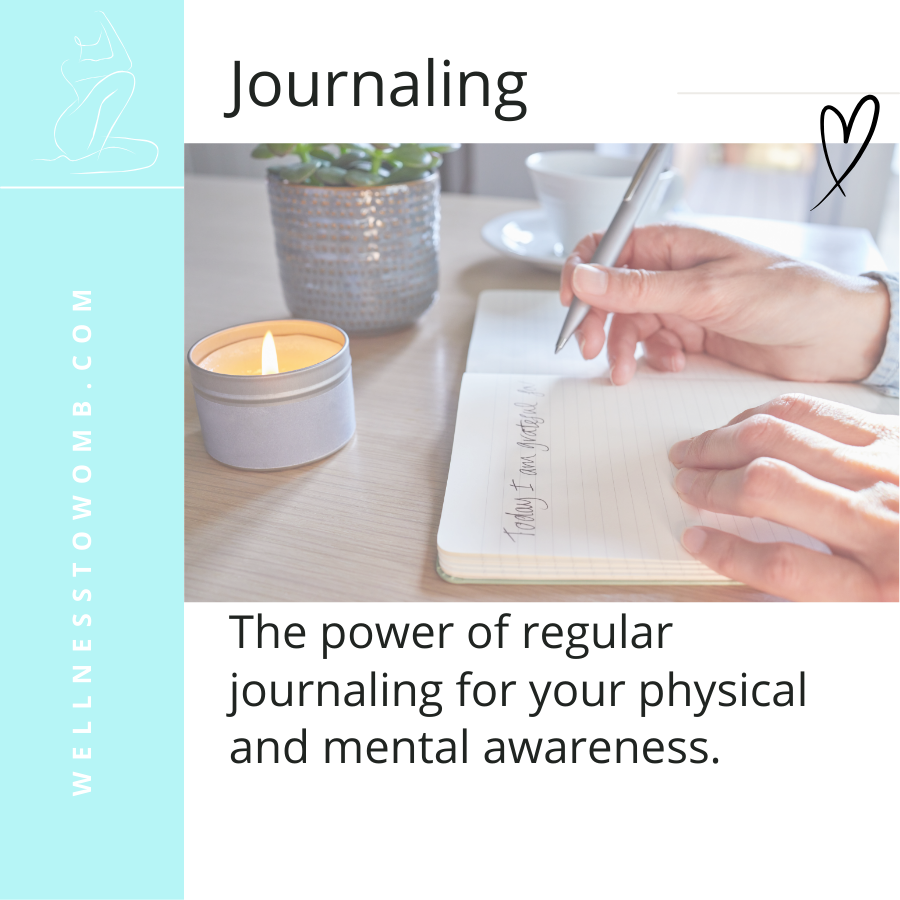
journaling for self-awareness
mental health journaling
physical health tracking
emotional wellness tools
self-reflection practices

Journaling is more than just putting pen to paper—it’s a practice that can transform both your physical and mental awareness. By regularly taking time to reflect and write, you create space to process emotions, understand your body’s signals, and nurture your overall well-being.

Here’s how journaling can enhance your physical and mental awareness:

  1. Track Physical Patterns: Use your journal to record how your body feels each day—energy levels, sleep quality, pain, or hormonal shifts. Over time, patterns may emerge, helping you better understand your physical needs.
  2. Process Emotions: Journaling provides a safe outlet to explore and release your feelings. Whether it’s joy, frustration, or sadness, putting it on paper can lighten your emotional load.
  3. Set Intentions: Writing down daily or weekly intentions keeps you focused and aligned with your goals, whether they’re about self-care, movement, or mindfulness.
  4. Explore Gratitude: A simple list of things you’re grateful for can shift your perspective and bring positivity to your day.
  5. Deepen Self-Awareness: Journaling invites you to reflect on your thoughts, actions, and habits, helping you grow and make meaningful changes.
  6. Connect with Your Inner Voice: Over time, journaling strengthens the connection to your intuition, empowering you to trust yourself more fully.

With just a few minutes a day, journaling can help you uncover the connection between your mind, body, and emotions—one entry at a time.

Suzanne Lawson | APR 26, 2024

Share this blog post