White Branches Blog
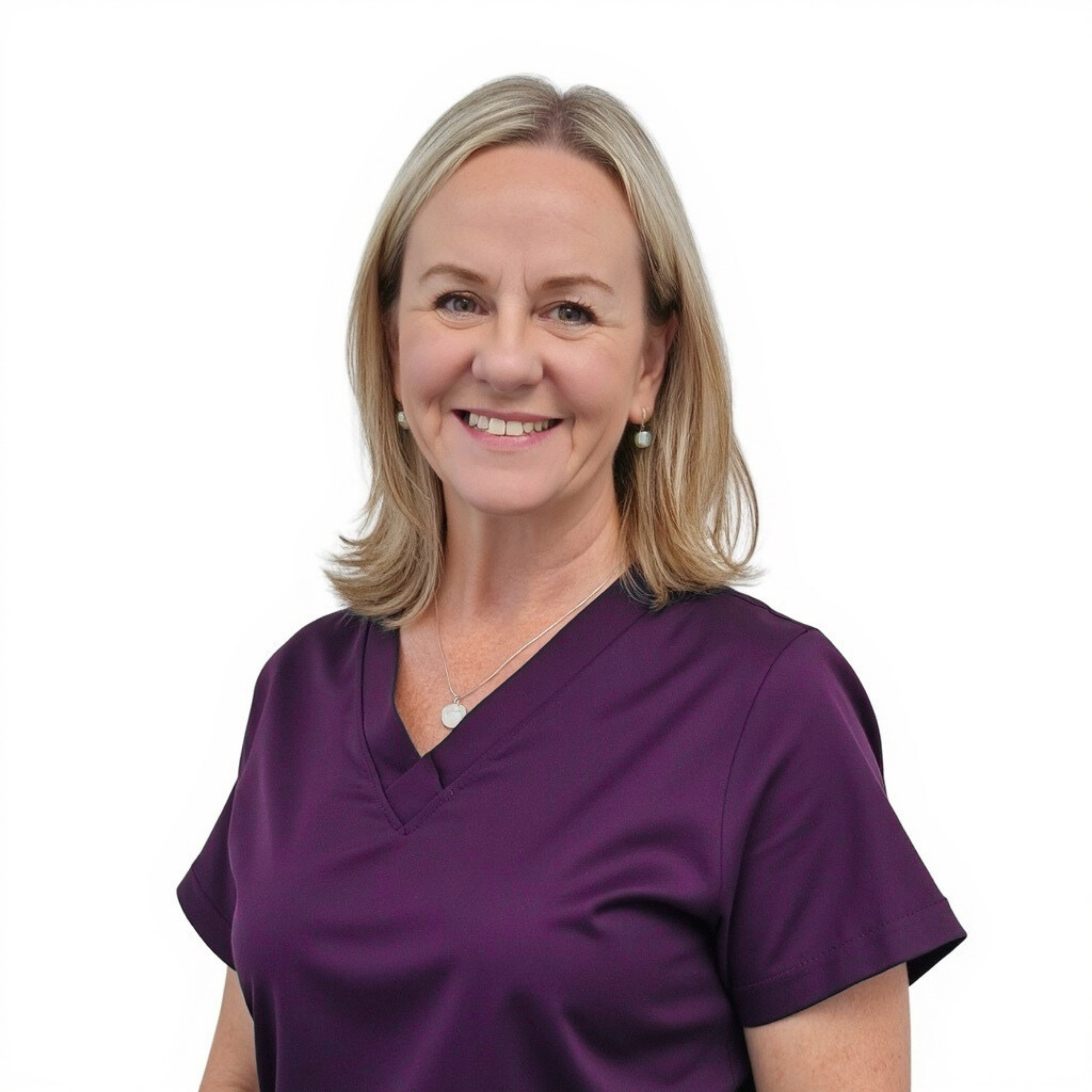
By Suzanne Lawson
From Survival to Thriving
What 25 Years of Holistic Healing Taught Me About My Body
I don't just teach wellness. I live it — because for a very long time, it was the only thing keeping me alive.
This is my story. I'm sharing it not for sympathy — I genuinely don't need it — but because somewhere out there is a woman sitting in a bath, riddled with pain, wondering if there is another way.
There is. I promise you there is.
The Body That Kept Surprising Me
My relationship with my body has never been simple.
I used to sum up decades of this in a single sentence. That was never honest — so here's the timeline in full, not for sympathy, but because what actually happened deserves more than one line.
Age 10 — The First Break >> A school-sponsored walk. A trip. And then a fracture, a dislocation, a chipped bone and an exit wound — the kind teachers have to stem with their own hands while someone runs for a doctor to work out how to even move me. Emergency surgery rebuilt my elbow with pins. I still carry the four-inch scar on the inside of my arm. I still remember the pain. What I remember more is what came after: I didn't know how to say I was in pain. So I didn't. I went quiet. Withdrew. And nobody saw it, because I never gave them anything to see.
Age 12 — "It'll Go Away When You Have a Baby" >> Stomach pains that wouldn't quit. Back and forth to the GP, over and over, until someone noticed the pattern — running, swimming, exertion, even food would set it off. This was the 1980s. Dinner came out of a packet and went in the oven. Nobody was looking for a root cause. It got serious enough that a GP finally referred me to a consultant. My mother and two nurses held me down while a male doctor performed an internal exam on a twelve-year-old. I remember that pain too. His diagnosis, delivered like fact from a man in a white coat I had no reason not to believe: when you're grown up and have a baby, it'll go away. I filed it as truth. It would take another two decades to learn it was a guess.
Age 15 — The Vice >> My periods started, and life got complicated in a way I didn't have language for. Pain that arrived like a vice with no warning. Bleeding so heavy it felt like wetting myself — three thick pads at a time, stacked front, back and on top, hidden in my bra so I could make a dash for the loo before it went through. Clots the size of golf balls. Sitting in class breathing through my nose, gripping the edge of the desk, jaw clenched, shoulders locked, just getting through the next wave. I asked no one, because I'd already decided I was the wimp and this was simply what a period was. Years of this. Silent, every time.
My 20s — Finding My Voice, Getting Nowhere >> I met the man who'd become my husband. No pregnancy came. I went back to the doctor, and for the first time I had a voice — I asked friends if their pain was like mine. It wasn't. I went to the library, because there was no internet yet, and found one word that matched everything I'd lived: endometriosis. I brought it to my GP, a man, who told me it didn't sound like that and handed me more pills. The cycle held.
Age 26 — Cancer >> Cancer took hold in the arch of my foot. They had to dig it out and graft skin over what was left — every inch of skin on my sole removed down to the bone at the top of my foot. Stop for a second and actually picture that pain. The donor site was worse than the foot itself: an inch-deep wound the size of my palm, that had to stay dry and unbandaged, so exposed that even the air from someone walking past my hospital bed was enough to nearly make me faint. Two years of recovery. And still, the pain didn't stop — it just changed shape.
Age 27 — "There's Nothing Wrong With You" >> A laparoscopy, to finally investigate. I woke up in a hospital corridor with instruments still in me, off-the-charts pain, no idea why I was even there. Sedated, sick all night on the ward. Two weeks later: we found nothing, there's nothing wrong with you. That sentence did more damage than the surgery. Not just physically — the not-believing. The wondering if they'd even looked. Every year that had led to that moment, dismissed in one line.
Age 32 — Diagnosed, and Told I Was On My Own >> A dye test to check my fallopian tubes for blockages went catastrophically wrong — I went blind, the pain excruciating, and spent a week in hospital while they flushed it out of my system. Rare, they told me. More tests. Another laparoscopy. And finally, the words I'd been chasing for twenty-two years: you have endometriosis. Stage four. I burst into tears in the consultant's office. They'd done all they could without risking my organs. He apologised for how long it had taken to find. And then he told me I was on my own.
Age 38 - Jack >> I was a year into being on my own. My marriage had ended, and after three rounds of IVF over four years, all failed, I'd stopped trying to build a family and started building a home instead. My flat became my sanctuary. I filled it with beautiful wallpapers, colourful fabrics, pre-loved furniture, everything sitting in that bohemian, Victorian style I loved. I was up a ladder painting when I felt sick and dizzy. I came down, felt fine, carried on. The next day, the same thing happened.
I mentioned it to a friend, who asked, "you're not pregnant, are you?" No, don't be silly. But it made me stop and think, when was my last period? A question I'd never once had to ask myself, because there was always that damn pain to mark the time for me. I did a test. I was pregnant. By the time I had a scan, I was around twenty weeks. I'd been seeing someone for about a year, nothing serious, no plans to live together. And here is the harsh truth of it. I did not want to be a single mother. I panicked.
At thirty weeks, I lost him. A baby boy. I would have named him Jack.
The grief was real, and it wasn't only for Jack. For the first time in my life, I was grieving what could have been. No one tells you that you're allowed to grieve when you can't conceive, or when you turn up to another IVF appointment that fails. This was a grief with nowhere to go. And honestly, underneath it, there was relief too. Both were true at once.
Age 48 — Twenty Years Later, It Came Back Round >> Covid lockdown stripped away every distraction I'd built my life around, and PTSD from the cancer recovery I'd survived two decades earlier came looking for me. I'd filed that trauma away at the time — you do, when you're young and desperate to get back to living — but it had been waiting the whole time. It surfaced as nightmares. As a body that flinched at hospitals, at needles, at silence. As a grief I hadn't let myself feel the first time round, arriving twenty years late and just as raw. Emotional pain, it turns out, doesn't expire. It waits for you to be still enough to notice it.
Age 49+ — The Body Tried to Prove the Pattern One More Time >> An oophorectomy pushed me into surgical menopause overnight. No gentle transition, just a switch flipped, and the whole cycle of pain and dismissal started again from scratch. Then sepsis. Then necrotising fasciitis. Then liver failure, a pain so relentless I have no clean way to describe it. My body was poisoning itself from the inside while I lay there, unable to do anything but endure it. I nearly died. Twice. And it was Covid. No appointments, no continuity of care, no one to actually sit with me and let me explain what was happening in my body or in my head. I couldn't find the words even when someone was listening. I had suicidal thoughts. I was dismissed, by doctors too stretched to see me properly, and by a corporate job that had no room for a woman quietly falling apart at her desk. Nobody came. So somehow, I found a way to hold myself up.
My body, it seems, has never done things by halves.
But here's what I want you to know — and I mean this with every part of me: I'm still here. Still moving. Still showing up.
And I genuinely believe that the practices I'm about to share with you are a significant part of why.
The Night Everything Changed
A few weeks after my diagnosis I was in the bath.
Riddled with pain. Sobbing. The endometriosis was crippling my bowel — I was going to the toilet maybe once or twice a month. I was exhausted in a way that sleep couldn't touch. I felt completely, utterly alone in my body.
And then something happened that I still can't fully explain.
It was as if someone placed a hand on my shoulder. And somewhere deep inside I heard four words:
There is another way.
I started researching that night. And I haven't stopped since.
What 25 Years of Holistic Healing Has Taught Me
I want to be very clear about something. I am not your typical wellness practitioner.
I don't have a picture-perfect bendy body. I'm still figuring out how to navigate the over-50 body changes that nobody warned me about. I struggle — genuinely, honestly struggle — just like anyone else.
But I ask myself constantly: where would I be if I didn't do these things? If I didn't move my body, breathe deeply, rest when I needed to rest and embrace the practices that keep me going?
Holistic healing has been my anchor. Reflexology, reiki, yoga, meditation, mindfulness, nutrition, Traditional Chinese Medicine, crystal therapy — I have explored all of it. Not as an academic exercise but as an act of survival.
I have sought wisdom from therapists, specialists and medical experts around the world. I have trained for over 750 hours in Hatha and Yin yoga. I hold certifications as a Chinese Medical Yoga Practitioner for women's health, a reflexologist and a reiki master. I have explored astrology, past life regression, sound healing and more — because healing isn't about staying inside the lines. It's about finding what works for your body, your nervous system, your life.
Nearly 25 years of constantly listening to experts and connecting their wisdom with my reality.
And here is the single most important thing all of it taught me:
Your body is not your enemy. It is your most intelligent ally — and it has been trying to communicate with you all along.
What Traditional Chinese Medicine Showed Me
The biggest shift in my understanding came through Traditional Chinese Medicine.
Where conventional medicine saw a broken body full of problems to be fixed, TCM saw something entirely different — an interconnected system of energy, flow and rhythm that had been overwhelmed, depleted and ignored for too long.
In TCM your menstrual cycle is not just a physical event. It is a map. A monthly report from every system in your body, telling you exactly what it needs — if you know how to read it.
The four Inner Seasons of your cycle — Winter, Spring, Summer and Autumn — each governed by different organ systems, different energy patterns and different needs — gave me a framework for understanding myself that nothing else had.
When I finally stopped fighting my Winter phase and started honouring it — resting deeply, nourishing my kidneys, saying no to the things that depleted me — everything began to shift.
Not overnight. Not perfectly. But steadily, deeply and sustainably.
The other thing TCM gave me was perhaps even more profound.
Permission to find my voice.
In TCM the liver governs the smooth flow of Qi throughout the body — and one of the most common causes of liver Qi stagnation is suppressed emotion. Unspoken needs. Chronic people pleasing. Saying yes when every cell in your body is screaming no.
I had been doing that for decades. And my body had been carrying the cost.
Learning to say no — to people, to commitments, to the version of myself that kept giving until there was nothing left — was as much a part of my healing as any yoga pose or herbal formula.
I Didn't Train to Help Others. I Trained to Help Myself.
This is the part of my story I find most important to share.
I didn't set out to become a practitioner. I didn't have a grand plan to create the BHR Framework™ or build White Branches or write a book or start a YouTube channel.
I trained in all of these modalities — yoga, meditation, reflexology, reiki, TCM, crystal healing — because I was desperate to understand my own body. To find relief. To survive.
And somewhere along the way — after nearly 25 years of learning, practising, failing, adjusting and listening — I realised I had built something. Not just a collection of qualifications but a genuine, integrated approach to women's cyclical health that actually worked.
The BHR Framework™ — Body Heart Release — is the distillation of all of it. Every hard lesson. Every body that surprised me. Every voice that told me there was another way.
What Thriving Actually Looks Like
I want to end with this — because I think it matters.
Thriving doesn't look the way the wellness industry tells you it does.
It doesn't look like a perfect body or a flawless routine or never struggling. It doesn't mean your endometriosis disappears or your past stops having weight.
For me, thriving looks like understanding my body deeply enough to work with it rather than against it. It looks like knowing when to rest and when to move. It looks like saying no without guilt and yes without resentment. It looks like finding practices that feel like coming home rather than another thing on the to-do list.
It looks like being here — still moving, still showing up — after everything my body has been through.
And I believe with everything I have that it's available to you too.
Not because I'm special. But because your body, just like mine, has been speaking all along.
It's time to learn its language.
Ready to begin?
🎯 Find your pain pattern in 2 minutes — the free quiz:
Discover what your body is trying to tell you and get a personalised plan rooted in TCM.
whitebranches.co.uk/quiz
🌙 She Thrives™ — free wellness app:
Your cycle tracker, dream journal and womb wisdom reflection tool. Free, private and always yours.
whitebranches.co.uk/she-thrives
📖 Womb Warriors Unite — the book:
The story and the science behind everything I've shared here — from £9.
whitebranches.co.uk/book
🧡 BHR Collective™ — first month free:
A warm community of women who truly get it. Includes the 28 Day BHR Reset™ and Womb Warriors Unite eBook — both free when you join.
whitebranches.co.uk/collective
Suzanne J Lawson is a holistic wellness practitioner, TCM-informed yoga therapist, published author and founder of White Branches and Wellness to Womb. She has been navigating her own complex health journey for over 25 years and now supports women around the world through the BHR Framework™ — Body Heart Release.
About Suzanne J Lawson
you can call me Suze!
Suze is a holistic wellness consultant specialising in women's gynaecological health, endometriosis, PCOS, chronic pelvic pain, and cyclical living. She trained in yoga (hatha, yin & restorative), Traditional Chinese Medicine, reflexology, Reiki and crystal therapy, after her own diagnosis taught her that no single approach was ever going to be enough on its own. She's the creator of the BHR Framework™ and the free She Thrives™ app, and the author of Womb Warriors Unite. Through White Branches, she helps women who've been dismissed by conventional medicine find their way back to their own bodies.
Want to share your thoughts? Know anyone who'd enjoy the read?
Comment below or reach out to Suze at info@whitebranches.co.uk (she reads EVERY email!).
If you would love to pass this post along to another sister who needs it, please share the love! (Psst... if you are reading this on your phone, just scroll back up to the very top of your screen to copy the browser URL web link from your search bar and text it or post it to social media!)